Home
Welcome to KHU ICP(Integrated Climate Process) Lab!
KHU ICP lab focuses on the following areas: monsoon climates, land and atmosphere interactions, and climatic impacts on agriculture, forests, and human health.
Recent News
Highlighted Ahyeong‘s research at KHU main webpage (경희대학교 Focus “토지피복 정책, 지역별 지리적 특성 고려해야“, Oct 2024)
Changok joined ICP lab, welcome! (July 2024)
Research on identifying climatological processes of large wildfire in Gangwon-do, Korea (강원도 영동지역 봄철 대형산불의 시공간적 패턴 및 기후학적 프로세스 연구) by Naeun (lead author), Yaeone, Ahyeong was published in Journal of the Korean Geographical Society (대한지리학회지, June 2024)
Ahyeong‘s master study on detecting land cover and land use transitions in the East Asian monsoon region, published in The Geographical Journal (Top 10% in Geography, 지리학분야 상위 10% 저널) Great job! (May 2024)
Congratulations! Ahyeong received the best presentation award at the 2024 Annual Meeting of the Association of Korean Geographers (한국지리학회 춘계학술대회 우수 논문 발표상 수상, May 2024)
Hyungjoon joined ICP lab, welcome! (Mar 2024)
Ahyeong and Yaeone have earned M.S. degree!! (Feb 2024)
Congratulations! Ahyeong received the excellent thesis award (우수학위논문 자연과학계열 우수상, Jan 2024)
Congratulations! Yaeone received the best paper award at the 2023 KCJ Joint Conference on Geography (한중일 지리학대회 학문후속세대 우수 논문상 수상, Oct 2023)
Congratulations! Minjoo received the best presentation award at the 2023 Annual Meeting of the Korean Geographical Society (대한지리학회 연례학술대회 학문후속세대 우수발표상 수상, Jun 2023)
Congratulations! Ahyeong received the best poster paper award at the 2023 Annual Meeting of the Korean Society of Climate Change Research (한국기후변화학회 상반기학술대회 최우수포스터논문상 수상, Jun 2023)
Ahyeong (Land cover transitions and the impacts) and Yaeone (L-A interactions for forest fires in Australia) presented their research at the AAG Annual Meeting (Mar 2023)
Jieun‘s master study on the vegetation effects on summer temperature in North Korea, published in Theoretical and Applied Climatology (Mar 2023)
Previous News
The works on the improved seasonal definition in South Korea, published in Meteorological Applications (Dec 2022)
Validations of climate reanalysis data in the East Asian monsoon region, published in Atmosphere (Sept 2022). Congratulating Minseok!
The associations of thunderstorm and acute asthma attacks have revealed through the international collaborations, published in Environmental Health Perspectives (Top 10% in Environmental Sciences, 환경과학분야 상위 10% 저널) (Aug 2022). 기후변화로 인한 ‘뇌우 천식’ 확인…천둥·번개 치면 환자 늘어 (한계레신문, 2022.09.06)
The 34-yr LCLU maps in the East Asian monsoon region were generated, published in Land (Mar 2022)
Warming effect of vegetation over the alpine grasslands in the western Tibetan Plateau was identified, published in Earth Interactions (Jan 2022)
Congratulations to Ahyeong and Yaeone for being selected as excellent presenter in 2021 KMA Climate Change Analysis Contest, “나도! 기후변화 분석가” (Sept 2021)
Research Highlights
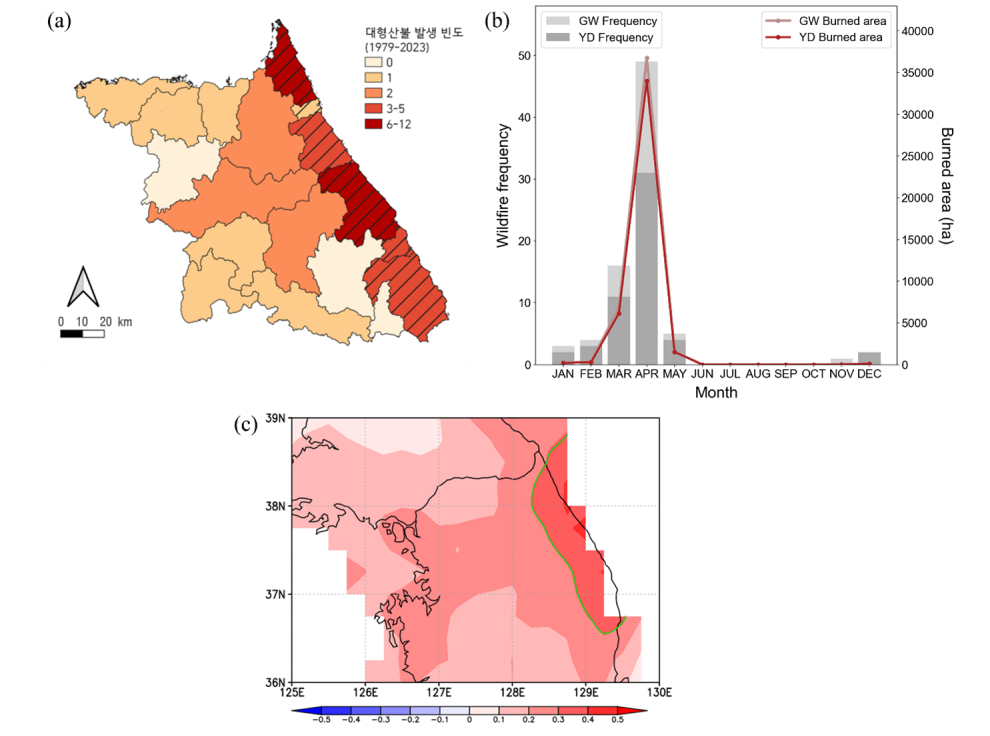
The increase in temperature over the southcentral Eurasia enhanced the geopotential height in the mid- to upper-troposphere through the thermal expansion of the atmosphere, which resulted in the northwesterly winds blowing over the Korean Peninsula. These atmospheric thermodynamic processes induced the anomalous pressure pattern of western-High and eastern-Low, respectively, centered over south-central Eurasia and northeastern East Asia, which strengthened the northwesterly winds. At the same time, descending wind anomalies from the upper atmosphere over eastern China and the Yellow Sea have merged into the northwesterly winds in the lower atmosphere. Then, as crossed over the Taebaek Mountains, the hot and dry conditions of airflows were amplified in the Yeongdong region due to the Föhn phenomenon.
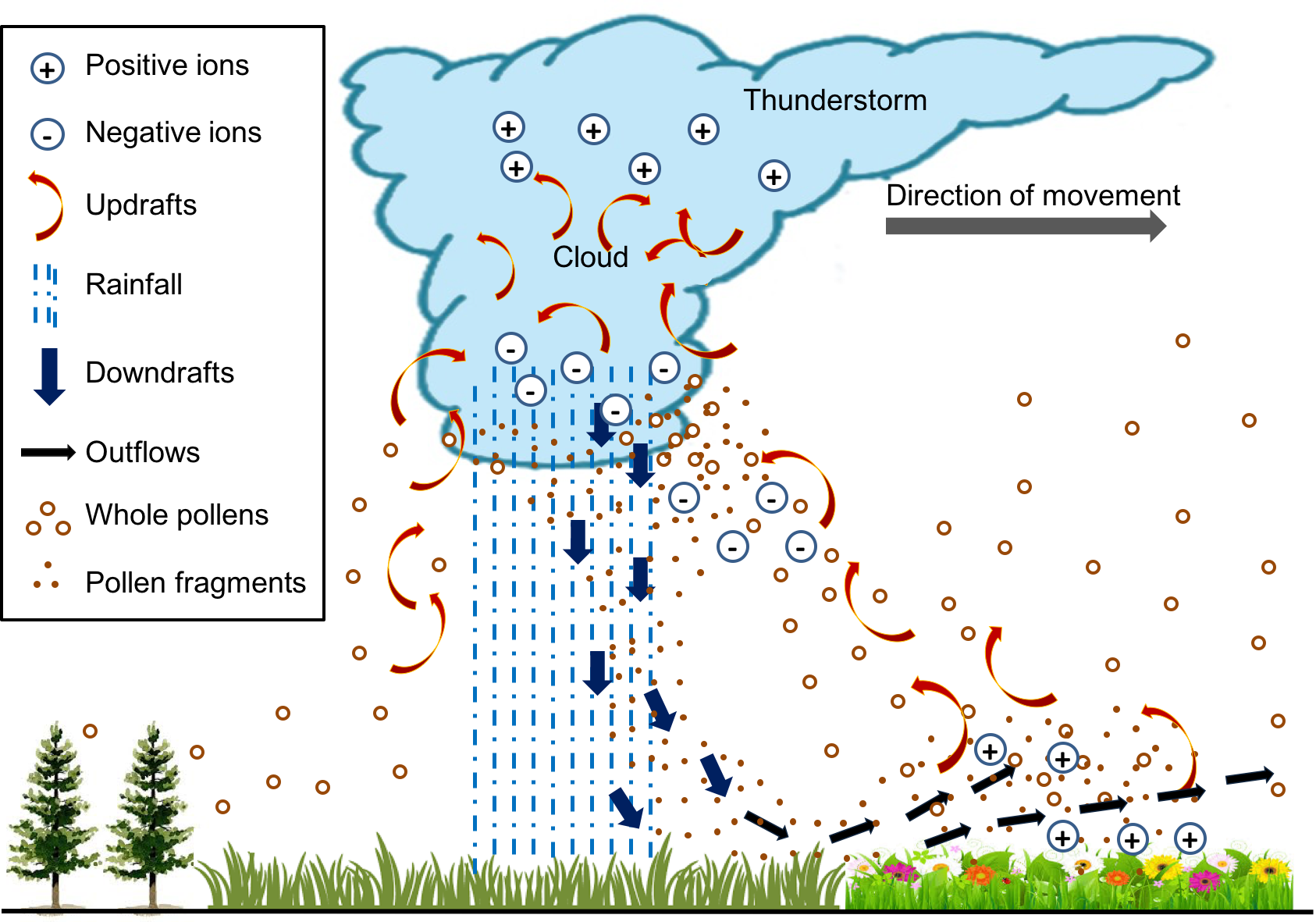
The initial stage of thunderstorm development, whole pollen grains on the ground level can be carried to the cloud base by ascending air parcels. The pollen grains then frequently rupture upon contacting moisture in the cloud, releasing respirable pollen fragments with allergens in much higher concentration than the concentration of pollen grains themselves.
These bioaerosols could be positively charged by lightning activity and carried back down to ground level by precipitation and descending cool air during a thunderstorm. Precipitation itself can also influence atmospheric concentrations of pollens and mold spores.
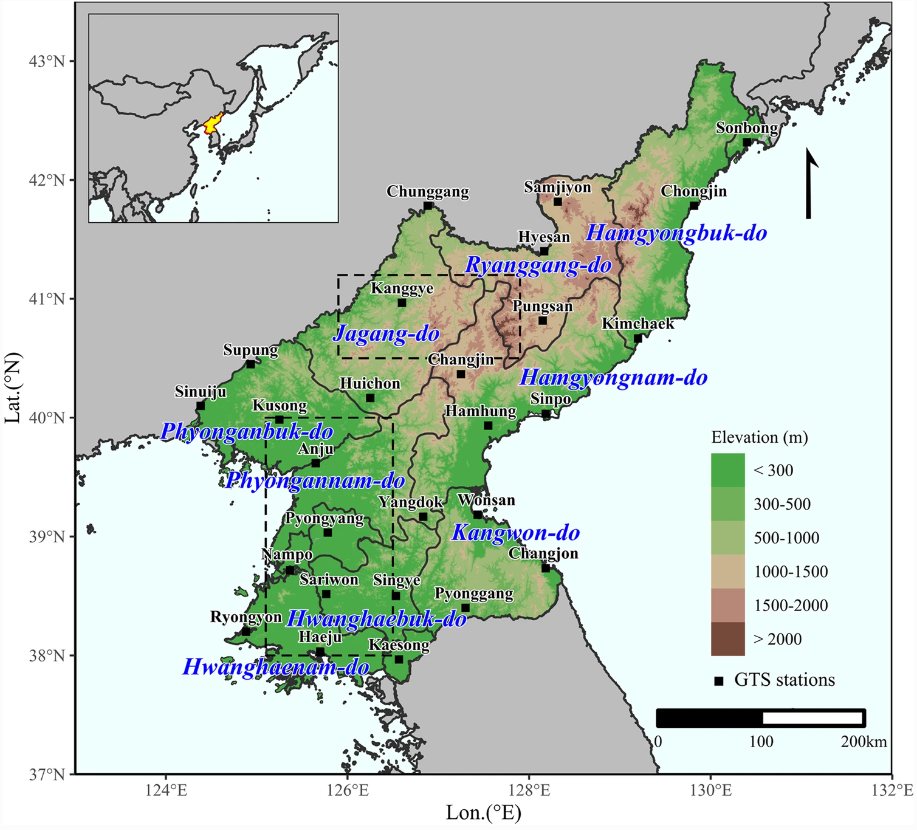
We examine the biogeophysical processes in vegetation and climate interactions in North Korea, using NDVI from the AVHRR GIMMS NDVI3g and the climate reanalysis data from the ERA5-Land over the period of 1982-2015.
In western (northern) region, a cooling (warming) effect of vegetation on the local temperature by 0.2–0.3 °C/0.1 NDVI during the summer. The competitive biogeophysical effects were induced by the geographical factors of relatively lower (higher) values of NDVI, altitude, and latitude in the western (northern) region.
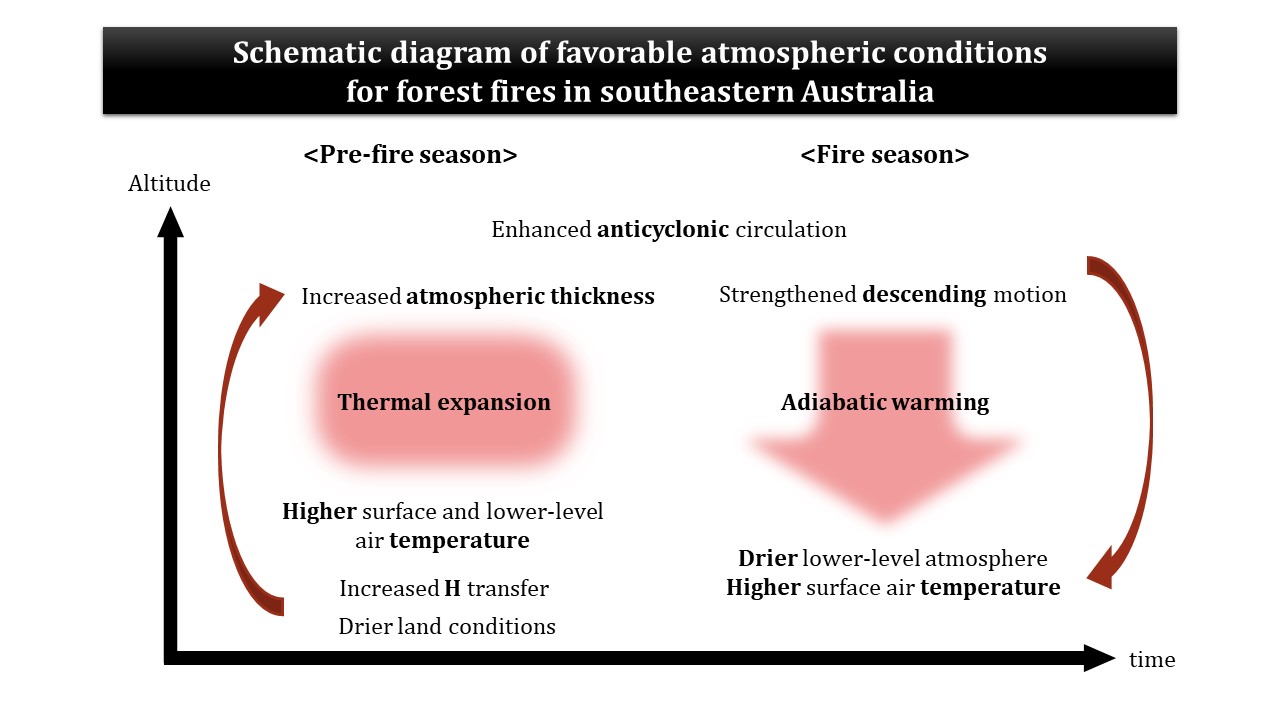
We attempted to investigate the interactions between the land and atmosphere in leading to forest fires in southeastern Australia (SEA) by analyzing the climatic variables from the near-surface to the upper atmosphere and Forest Fire Danger Index (FFDI). Using the DJF (fire season) FFDI EOF1 PC time series, we conducted the detrended correlation and composite difference analyses with the land and atmospheric variables. We propose a plausible physical process by which the dry land condition during the pre-fire season (SON) can affect the near-surface to upper atmosphere by thermal expansion and, thus, increase the danger of bushfires during DJF in the SEA by enhancing the anticyclonic circulation and descending motion at the mid-atmosphere. The vertical cross-section of temperature and geopotential averaged by latitude covering Australia supported the process.
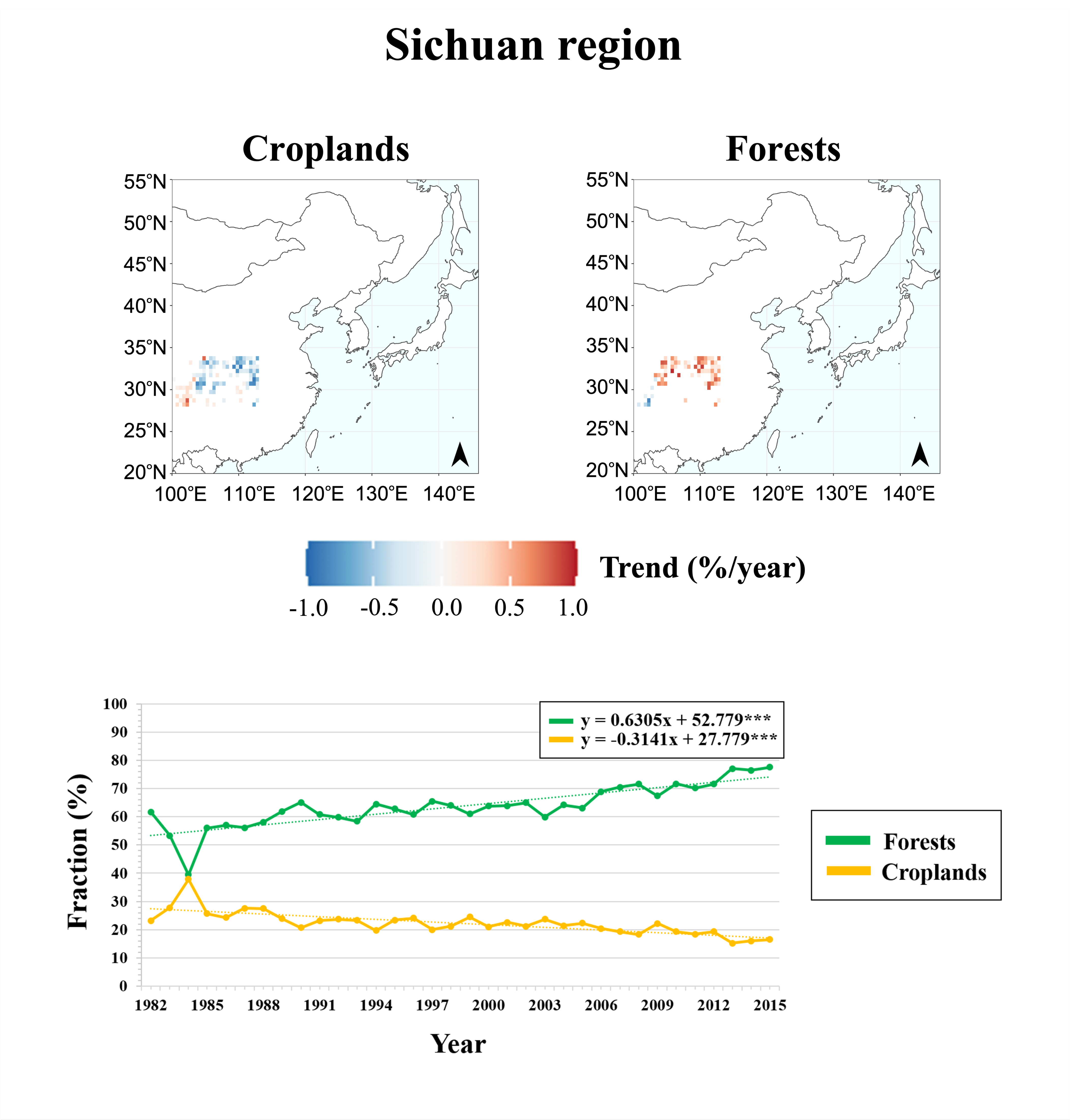
The quantified LCLU transitions revealed that, in northeastern China, the dominant trend was forests and grasslands changing into croplands. Moreover, in the marginal areas of Inner Mongolia in western China, the transitions of grasslands to croplands and forests were evident. Croplands were mainly converted to forests in the Sichuan region. The detected LCLU transitions affect the regional climate as demonstrated by correlation, regression and Granger-causality analyses and the related biogeophysical processes. Specially, in the Sichuan region, the increase in the warming effect of forests and the decrease in the cooling effect of croplands could affect the significant increase of temperature.


